Toxicities Associated with Cancer Treatments: Improving Care (TACTIC)
Cancer treatments save lives but can also cause serious side effects. Many of these effects are discovered after a drug (often approved at the maximum tolerated dose) is already in use , which makes ongoing safety monitoring—known as pharmacovigilance—critically important. The FDA’s Sentinel Initiative, a congressional mandated “Active Risk Identification and Analysis system”, is one of the world’s largest drug safety systems using anonymous real world health data across U.S. hospitals, clinics, pharmacies, and insurance plans.
The FDA has confirmed that the public may access to Sentinel data model and capabilities through the IMEDS program at the Reagan-Udall Foundation for the FDA. Building on this, a group of patient advocates, researchers, and clinicians have formed an alliance to make the use of real world toxicity data more accessible and patient-centered.
During the first series of IMEDS engagement meetings in November 2025, participants discussed how advocates could partner directly with the Reagan-Udall Foundation, which manages public access to parts of the Sentinel network through its IMEDS program. The group aims to raise patient-driven research questions, improve supportive care, and identify side effects earlier across multiple cancer types. Patient advocacy also helps to raise awareness to allocate enough resource to coordinate patient-led research utilizing this national resource.
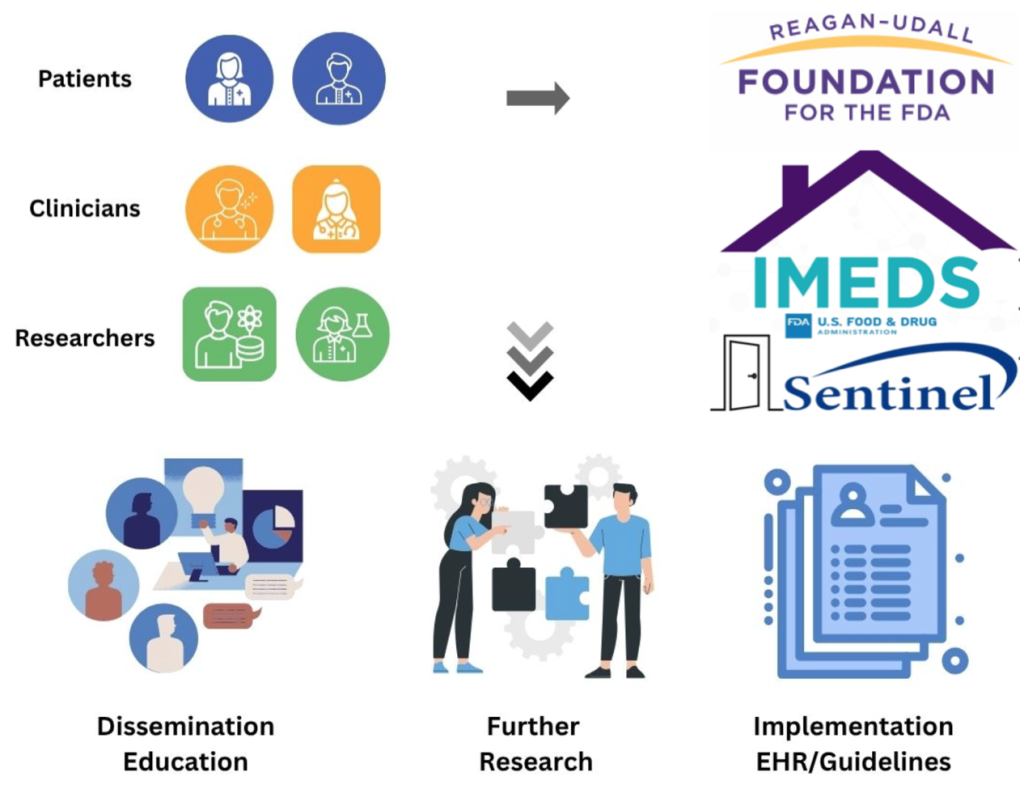
A patient-centered framework (shown above) was proposed to connects advocates, clinicians, and researchers in a structured way. The model emphasizes co-designing studies with patients, sharing findings back to the community, and using digital platforms for symptom tracking and education. It also calls for better integration of supportive care into cancer treatment—such as managing fatigue, pain, infection risk, or immune-related side effects—so that patients can safely stay on life-saving therapies.
Together, these efforts represent a shift toward patient-powered pharmacovigilance—where cancer survivors, caregivers, and clinicians jointly use national data resources to make treatments safer, more effective, and more responsive to real-world experiences.